
Dr. Denti
Dr. Denti
WhatsApp Free Consultation
photo
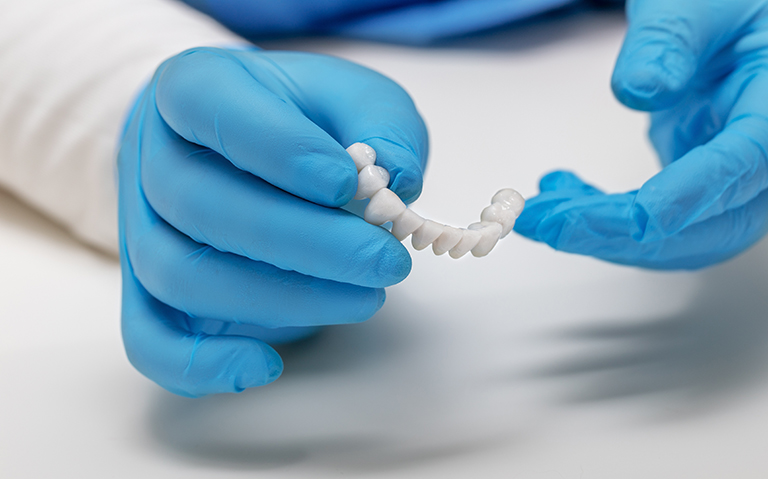
Zirconium Crowns 11

How Is Implant Treatment Done? How long will it take?

Implant treatment has become the most preferred method today in case of tooth deficiency. This application, which is an extremely attractive option especially for those who do not want to use prosthetic teeth, can achieve satisfactory results. We can say that the implant is one of the procedures completed in a comfortable process for the patient.

We will clarify all the questions about this special method developed against the problem of missing teeth. We will also examine issues such as whether the implant is painful or not, whether it can be applied to all teeth. But first, let’s talk about the number of sessions, which is a frequently asked subject.

How Many Sessions Required for Implant Treatment?

Of course, it is wondered how many sessions are required for implant tooth construction. The number of sessions may vary depending on how many implants will be made. At the same time, we can say that the patient’s bone quality is a determining factor in the number of sessions. Because if the bone quality is not sufficient, first of all, bone grafting should be done. Then the patient has to wait for a while, which may continue for several weeks, although it is not the same for every patient. After that, the implant process starts. In this case, the number of sessions will be more.

If the bone quality of the patient is sufficent, it is possible to perform the implant procedure immediately. Routine dental check-ups must be made after the implant procedure. We should also mention that it is a treatment method that the patient can easily adapt to. It is possible to benefit from all the functions of the teeth without the need for any adaptation process. Moreover, in this process, there are no problems that force the patients. After the examination, your dentist will inform you about the estimated number of sessions.

How Is Implant Tooth Made?

Of course, patients also wonder how the implant tooth construction process takes place. We can state that this process can be done in 4 different ways in general. In the first method, the tooth that cannot be repaired, needs to be extracted. The implant is placed immediately in the space formed in the place of the extracted tooth. We can state that this first method is the most practical for the patient as well as the dentist. In addition, there is no need to make any incisions or stitches.

Another method of implant tooth construction is known as the ‘closed technique’ among the people. In this method, the filep is not opened, so there is no need to cut the patient’s tissue. A small cavity needs to be created using laser technology. Implant is placed in this cavity and thus it is possible to complete the procedure. We can say that this method comes into play in cases where the patient’s bone tissue is suitable. It is a very comfortable method because it is completed in a single step.

The third method is applied when it comes to mini-implants. For this method, which involves direct implant application over the mucosa, the patient’s bone quality must be sufficient. We cannot say that it is a method that is frequently preferred today, but it can be applied if the patient’s mouth and jawbone condition is ideal.

Implant tooth construction with the fourth method is also the most well-known method in the society. This method, which is classically performed with surgical intervention, is also the most preferred. In this method, a small gap is opened in the patient’s jawbone with surgical intervention. An implant is placed in this space. The prosthetic tooth is placed on the implant, sometimes immediately or about a week later. This completes the process.

Of course, in order for these methods to be applied successfully, the patient’s bone quality must be suitable for the procedure. If the bone quality is not good enough, then bone grafting is needed beforehand. In case patients apply for implant tooth construction, the dentist decides which method will be preferred after procedures such as examination and x-ray.

Does Implant Treatment Hurt?

There may be misconceptions about implant tooth construction among the public. One of them is that the procedure is very painful, which cannot be true. Because before the procedure, the area to be intervened with local anesthesia is absolutely numbed. It is never preferred to perform this procedure without anesthesia. Therefore, no matter which area the implant is to be implanted, the patient does not feel any pain, aches or pains during the procedure. Since this area is numb, it is not possible to hurt.

However, after the procedure, it is possible to have a slight ache or pain after the effect of the anesthesia wears off. This is quite normal and it should not be forgotten that the pain felt is temporary. With the use of painkillers prescribed by the dentist, it is possible to control the pain in question. Most of the time, patients talk about a mild pain that does not even need to drink medicine. Therefore, the pain felt after the procedure is not severe enough to disrupt daily life or business life.

Can All Teeth Be Implanted?

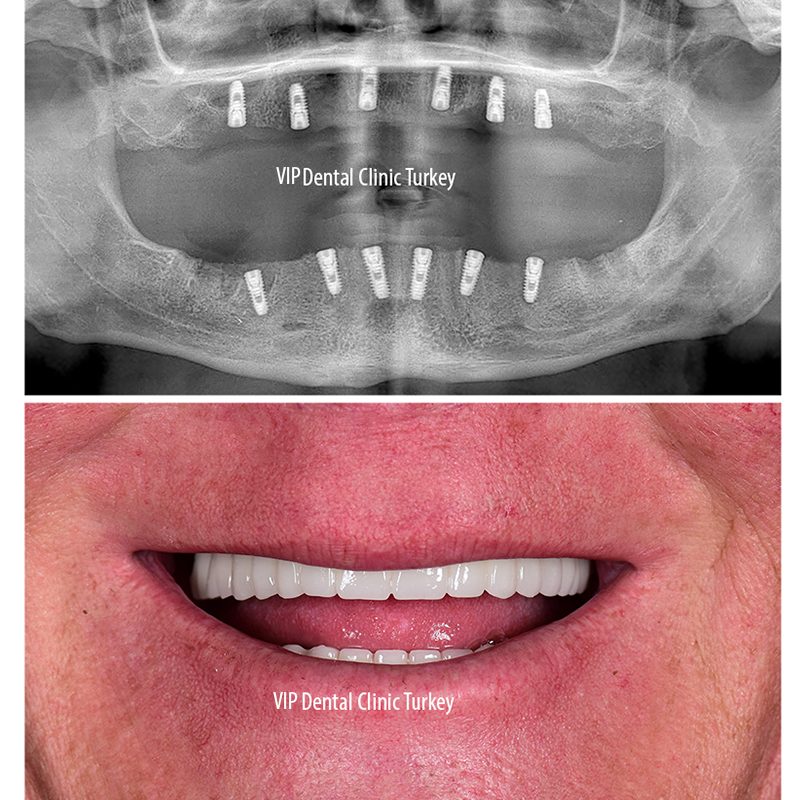
If the patient has no teeth, total implant tooth construction can be performed. However, of course, there must be sufficient bone tissue in the jawbone. There are also alternative procedures that can be applied if there are no teeth in the mouth. We can give examples of bridge, removable prosthesis or partial prosthesis to these treatment options. How many implants should be placed in patients with no teeth is also among the issues that are wondered.

If 8 implants are placed in one jaw, it is possible to fit all teeth. However, it should be noted that this number may vary depending on the mouth structure of the patient. After the examination, you can get more information about implant tooth construction and how many implants will be used in case of no teeth.

Please Read –> All on 6 Dental Implant Surgery

How is the prosthesis attached to the implant?

First of all, it should be noted that a specially developed and screw-like material is used in the implant tooth construction process. After this material is fixed, it is applied on the prosthetic tooth. Thanks to the special apparatus that adheres to the attachments on the material, it is possible to use these teeth without any problems, just like natural teeth. There is no problem during actions such as talking or eating. At the same time, patients do not have to worry about the prosthetic teeth coming out. These features are among the reasons why this process is preferred more and more day by day.

Is There Pain During Implant Application?

Like many dental treatments, the area is numbed before the implant tooth is made. Anesthetizing this area with local anesthesia prevents the feeling of pain during the procedure 100%. Therefore, patients do not feel any pain or pain during this whole process. Although many people have missing tooth problems, they do not benefit from this application due to the fear that the procedure will be painful. However, it is not a painful procedure as it seems.

Of course, there may be a very slight ache or pain after implant tooth construction. However, let us state that this situation is medically quite normal, and we should not worry about it. Most of the time, this mild pain goes away on itself after hours. In rare cases, it may continue for a few more days.
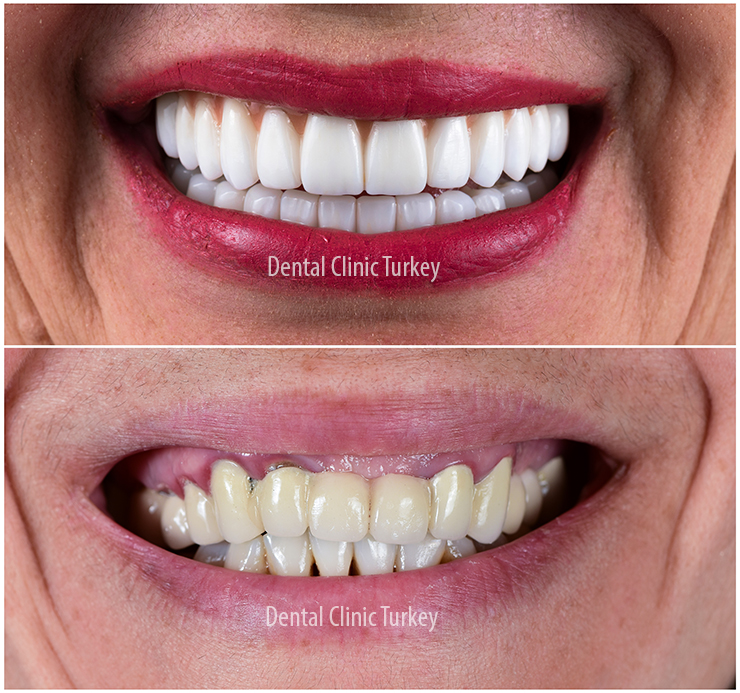


dental treatment in turkey

Dental Treatment in Turkey

Dental Treatment in Turkey: Everything You Need to Know Before You Go (2026)

Turkey treats more international dental patients than any other country in Europe. The numbers have been climbing for over a decade and the reasons behind that growth have not changed: the cost is substantially lower than at home, the quality at established clinics is genuinely high, and the logistics of combining treatment with a short trip have become well-practised at both ends. Patients from the UK, Germany, the Netherlands, France, and Scandinavia now travel to Turkey for dental work the way previous generations travelled for elective surgery. It has become, for many, the obvious and unsurprising choice.

This guide covers what you actually need to know before you go. Not the promotional version. The honest one.

Free Consultation
Get a Treatment Plan Based on Your Case
Send us your photos. We review and respond within 24 hours.

Why Turkey Became Europe's Go-To for Dental Treatment

The price difference is structural. Running a dental clinic in Antalya or Istanbul costs considerably less than running one in London, Amsterdam, or Frankfurt. Labour costs, property, utilities, all of it sits at a fraction of the Western European equivalent. The materials inside that clinic, the implant brands, the ceramic systems, the digital scanning equipment, came from the same manufacturers. The dentist who treats you trained for five years and in many cases completed postgraduate specialisation on top of that.

What patients are paying less for is not the clinical quality. It is the overhead that surrounds it. That structural difference produces a price gap that is not marginal. For most treatments, patients save between 60 and 75 percent compared to equivalent private care at home. That is the figure that makes the flight worthwhile.

Something else has happened alongside the price advantage that tends to go unmentioned. The clinics in Antalya and Istanbul that have been handling international patients for years have built a process specifically around the constraints of people flying in for a week. The coordinator who contacts you speaks your language. The hotel is sorted. The car is at the airport. The appointments are sequenced so that travel days are not wasted. Patients who have dealt with waiting lists, GP referrals, and fragmented specialist appointments at home often remark that the Turkish experience felt more organised, not less. That is not an accident. It is the result of clinics having refined this particular type of patient journey over a long time.

What Treatments People Come to Turkey For

People come for different reasons but the treatments themselves cluster into a handful of categories that account for the vast majority of international patients.

Missing teeth bring the largest group. Someone who has been told an implant costs £2,500 at their local clinic and has put the decision off for two years looks at the Turkish price and makes the appointment. A single implant including the crown at an established clinic in Antalya sits between £500 and £900. The procedure is identical. The implant brand is often the same. The cost difference reflects the operating environment, not the clinical standard.

Aesthetic work accounts for the second largest group. Veneers, crowns, whitening, smile makeovers. People who want to change something about their smile but found the private cost at home difficult to justify find that the Turkish equivalent changes that calculation. E-max veneers cost between £150 and £250 per tooth in Turkey. The same material from a comparable clinic in the UK sits between £700 and £1,000. Across ten teeth, that is a difference that funds the flights, the hotel, and the treatment combined and still leaves change.

Full arch cases, All-on-4 and All-on-6, bring patients who have often been living with significant tooth loss for years. The cost of this treatment at home, typically £12,000 to £18,000 for a single arch, has kept it out of reach. In Turkey the same arch runs £3,500 to £5,500. For patients needing both arches, the Turkish total often costs less than a single arch would at home.

Smile makeover packages combining multiple treatments, veneers, crowns, whitening, gum contouring, are increasingly popular as a single trip covering a complete aesthetic transformation. These packages vary in scope and price depending on what is involved.

TreatmentTurkey 2026UKGermany
Single implant + crown£500 – £900£2,000 – £3,000€1,800 – €2,800
E-max veneer (per tooth)£150 – £250£700 – £1,000€600 – €900
Zirconium crown (per tooth)£120 – £200£500 – £800€450 – €750
All-on-4 single arch£3,500 – £5,500£12,000 – £18,000€11,000 – €16,000
Smile makeover (10 teeth)£2,000 – £5,000£7,000 – £15,000€6,000 – €13,000

How to Choose the Right Clinic

The quality range is wide. At one end are well-run clinics with on-site labs, experienced clinical teams, and systems built around international patient needs. At the other end are operations that have entered the market to catch overflow demand and have made compromises on materials, lab quality, or time per patient. The marketing on either type of website often looks similar, which is why surface impressions are not a reliable guide.

What actually separates them comes down to a few specific things. Whether the clinic will share a preliminary treatment plan before taking a deposit. Whether they name the materials they use without being pressed. Whether the lab is on-site. Whether the aftercare process is described specifically or vaguely. These are the variables that predict the outcome far better than the photos on the homepage.

Accreditation and licensing are the baseline. Every legitimate clinic holds a Ministry of Health license and every practicing dentist is registered with the Turkish Dental Association. JCI accreditation indicates that an independent body has audited the clinic's operations. Not every good clinic holds JCI accreditation, but clinics that do have demonstrated a level of operational discipline worth noting.

Materials transparency is the most reliable signal of clinical quality. Ask the clinic which implant brand they use. Straumann, Nobel Biocare, Osstem. These are systems with documented long-term track records. Ask which ceramic system they use for veneers and crowns. A clinic that answers these questions specifically and without hesitation is one that is confident in what it is using. A clinic that gives vague answers or redirects to the price is telling you something.

Lab setup matters more than most patients realise. Clinics with on-site labs have direct control over quality and turnaround time. The ceramist working on your veneers is in the building. Adjustments happen quickly. Clinics that outsource lab work to cheaper external facilities have less control over either.

Patient reviews on independent platforms give a realistic picture of what previous patients actually experienced. Look for volume and recency. A clinic with fifty reviews over ten years is less informative than one with five hundred reviews in the last two years.

What the Process Looks Like Step by Step

Understanding the full sequence of a dental treatment trip to Turkey removes most of the uncertainty that stops people from booking.

Before you travel, the process begins with the remote consultation. You contact the clinic, share your dental photographs and any recent X-rays or scans you have. A dentist reviews your case and produces a preliminary treatment plan. This plan is discussed, adjusted if needed, and a quote is agreed. The clinic then confirms appointment dates, hotel, and transfer arrangements. Most clinics ask for four to six weeks notice for straightforward cases, more for complex implant treatments.

On arrival, you are met at the airport and transferred to your hotel. The first clinical appointment is typically the same day or the morning after. Full X-rays and photographs are taken, the treatment plan is confirmed against what the clinical assessment shows, and any adjustments are made and discussed with you.

During the treatment week, the main procedure takes place on day two or three. For veneer and crown cases, temporary restorations are placed while the lab produces the permanent pieces. For implant cases, the surgery happens and temporary teeth are fitted the same day in most cases. Recovery days follow, with lighter appointments for checks and adjustments. The permanent restorations are fitted toward the end of the week, fine adjustments are made, and you sign off on the result.

Before you fly home, ask for a complete clinical report. This document should specify every procedure performed, every material used, the dental implant price and model number if applicable, and any relevant dimensions or specifications. This report is what allows a dentist in your home country to continue your care without starting from scratch.

When you are home, a direct contact for aftercare questions is standard at clinics that take this seriously. The kinds of things that come up, mild sensitivity, a crown that feels high on one side, a veneer edge that catches slightly, can almost always be resolved remotely. A photograph sent via WhatsApp or email, a description of what you are noticing, and a response from the treating dentist is all that is required for most post-treatment questions. For anything that needs a physical appointment, the clinical report you brought home is what allows a local dentist to treat you without guesswork.

What to Prepare Before You Travel

Showing up with the right information makes the consultation faster and the treatment plan more accurate from the start.

Prepare before you contact any clinic

Recent panoramic X-ray or dental photographs in natural light from front and both sides
List of missing teeth and how long each has been absent
History of previous implants, crowns, root canals, or gum disease
Whether you grind or clench your teeth
Current medications, especially blood thinners, diabetes medication, or bisphosphonates
A clear description of what you want to change and your priority: aesthetics or durability
Your budget ceiling if you have one

Recent X-rays help. A panoramic scan is ideal. If you do not have one, send clear photographs of your teeth taken in natural light from the front and from both sides. Most clinics will work from these and take a proper scan when you arrive. The remote consultation is more useful when the clinic has something clinical to look at rather than just a description.

Know what you want to change before you ask for a quote. A specific brief produces a specific plan. A vague one produces a generic price. Knowing whether you care more about aesthetics or durability, whether certain teeth matter more than others, whether you have a budget ceiling, all of this helps a clinic produce a preliminary plan that is actually relevant to your situation rather than a document that covers every possibility.

What to Watch Out For

Dental tourism in Turkey produces good outcomes for the patients who approach it well and poor ones for those who do not. The problems that appear in negative reviews follow recognisable patterns.

Choosing on price alone is the most reliable route to a disappointing result. The cheapest options in Turkey are not the same as the best options in Turkey, and the difference shows up in the materials, the lab, and the amount of clinical time the dentist actually spends. A quote that is dramatically lower than comparable providers should prompt the question of where that saving is coming from.

Booking before any clinical information has been reviewed is the second most common problem. A treatment plan produced before anyone has seen your X-rays is not a treatment plan. It is a price list.

Expecting things that are not clinically possible in the time available creates pressure toward clinics that make promises they should not. Veneers need lab time. Implants need months of osseointegration. A two-day timeline for a full smile makeover is a signal, not a convenience.

Leaving without a clinical report is the mistake that causes the most difficulty later. Every patient should leave Turkey with written documentation of every procedure, every material, and every specification relevant to the treatment received.

Frequently Asked Questions

How long does dental treatment in Turkey take?
Most veneer and crown cases fit into a five to seven day trip. Implant cases where osseointegration is required involve two separate trips: one for surgery and temporaries, one three to six months later for the permanent prosthesis. Full-arch All-on-4 cases often follow the same two-trip structure.
Is the quality of dental treatment in Turkey comparable to the UK or Germany?
At properly chosen clinics, yes. The materials are from the same manufacturers. The equipment is the same generation. The clinical protocols are internationally standardised. The variable is the clinic, not the country.
What happens if I need follow-up treatment after returning home?
Any qualified dentist at home can continue your care provided you have a full clinical report from the treating clinic. This is why getting that documentation before you fly is non-negotiable.
Do I need travel insurance for dental treatment in Turkey?
Standard travel insurance does not cover elective dental treatment. Some specialist medical travel insurers offer cover for planned dental procedures abroad. Check the policy details carefully before purchasing.
Can I visit Turkey as a tourist while having dental treatment?
Yes, and most patients do. Treatment weeks are structured around clinical appointments, leaving recovery days free. Antalya in particular combines a well-developed dental infrastructure with genuine tourist appeal.
What should I do if I am unhappy with the result?
Contact the treating clinic first. Reputable clinics take quality seriously and will address genuine concerns. If the issue requires in-person intervention, a local dentist can assess and treat using your clinical documentation. If you have not received clinical documentation, request it from the clinic.
Free Consultation

Request a Callback

We will call you back within 2 hours during clinic hours.

WhatsApp
Thank you. We will be in touch shortly.
A confirmation has been sent to info@turkeydentalclinic.com
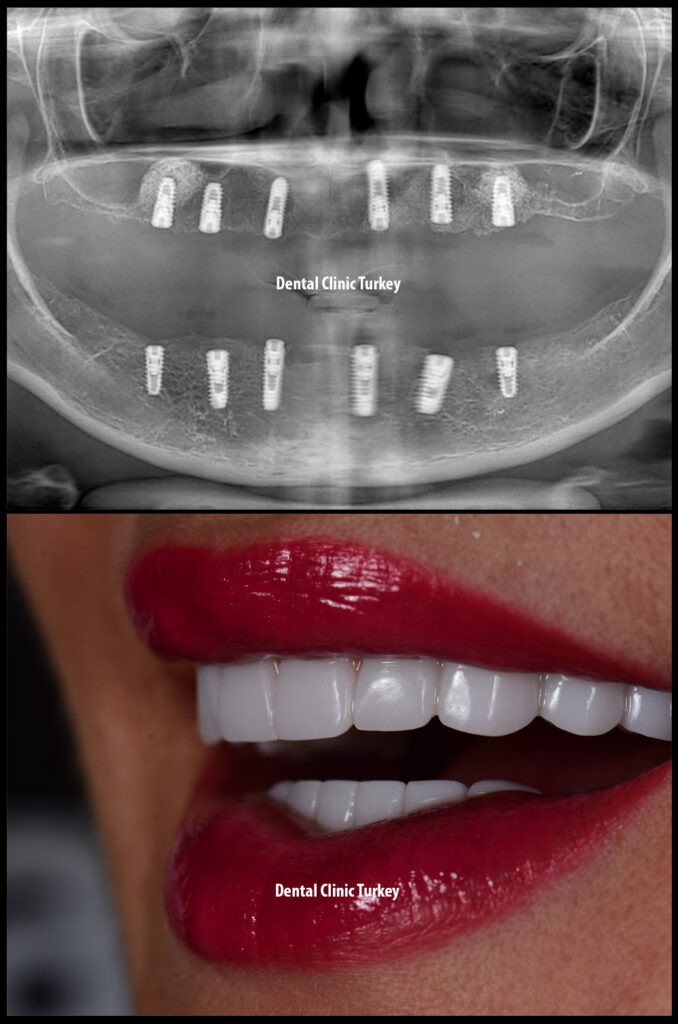
full mouth implant for woman

Can Implants Be Applied to Those Who Have No Tooth?

Can Implants Be Applied to Those Who Have No Tooth?

At least how many implants are needed for a fixed tooth in patients with no teeth? With dental implants, it has become possible to make implants in patients who have no teeth or have melting in the jawbones, without applying advanced surgical techniques.

One of the biggest advantages of implant treatment is that prosthetic treatment alternatives can be offered up to fixed prosthesis in patients with no teeth. In a patient with no teeth, fixed prosthesis can be used by placing the required amount of implants in the upper and lower jaws. Apart from this, it is possible to ensure that patients using removable prostheses use their prostheses as close to their almost fixed comfort with implant treatment.

Can Implants Be Made in a Non-Toothed Patient?

Our teeth are one of our indispensable organs for our motivation to feed and survive. Apart from our physical needs, it also has important psychological effects in our lives. The more it upsets a patient not to be able to eat due to a dental problem, the more upsetting it will be to not be able to smile for the same reason. For this reason, it is an important issue for everyone to have white, healthy and trouble-free teeth. When some patients decide to have a dental application, especially those with few or no teeth, they may experience various confusions. Words such as implant, root canal treatment, palate may scare them. Knowing the answers to questions such as whether implants can be applied to a patient with no teeth will eliminate this.

Affordable implants for everyone in Turkey…

What Are the Implant Options of the Patient Who Has No Tooth?

If a patient who has no teeth in his mouth wants to have an implant, it is possible to talk about the methods that are definitely successful. The success of the method applied varies in direct proportion to the palate structure of the patient and the success of the physician who applies it. As an application option, removable and fixed prosthesis can be used. After the appropriate prosthesis is selected and decided, the patient is prepared for the procedure and the application phase is started.

What is a removable prosthesis?

All on 6 and Smile Design with Dental Implant

It is one of the more practical ways to use it in patients with an edentulous lower jaw. Two implants are placed in the lower jaw or upper jaw. Then, after waiting for 4 or 6 weeks, the palate is prepared and attached to the prosthesis. The biggest advantage is that the patient can easily remove and put on these prostheses whenever he wants. Since the implants are supported by the palate, it is not possible to face a problem such as dislodgement while eating. At the end of a single session, the procedure is completed and the patient uses chewing functions. In total, four implants are sufficient.

What is Fixed Prosthesis and How Is It Applied?

In order to apply a fixed prosthesis, it is necessary to have a patient who does not have a single tooth. In order to provide a bridge, 6 implants are made and placed in the patient’s mouth. There is a waiting period of up to 6 weeks. Within two weeks, bridge prostheses based on 14 fixed teeth are made. Then the patient begins to eat and smile again. Thanks to the advancing technology, it is possible to treat even patients who have no teeth anymore and to make their teeth much better than before. Moreover, treatment times are getting shorter and shorter, contrary to popular belief.

High patient satisfaction with dental implants

Dental implants, a real revolution in dental practice; It has taken its place among dentistry treatments by constantly developing and being eaten by both physicians and patients. The treatment, which even physicians approached distantly in the first years, has become a frequently requested application by patients in today’s dentistry. Implant surgery was seen as a dubious alternative treatment in patients in the early years. Our patients were very afraid of this surgery and would run away. However, 10-year patient satisfaction studies show that 95 percent of patients are very satisfied with their implant treatment. Dental implant applications are constantly making progress with intense scientific research.

You can get more detailed information about dental implants by contacting Dental Clinic Turkey. You can call us whenever you want to make an appointment. Our phone and Whatsapp number +905443480787

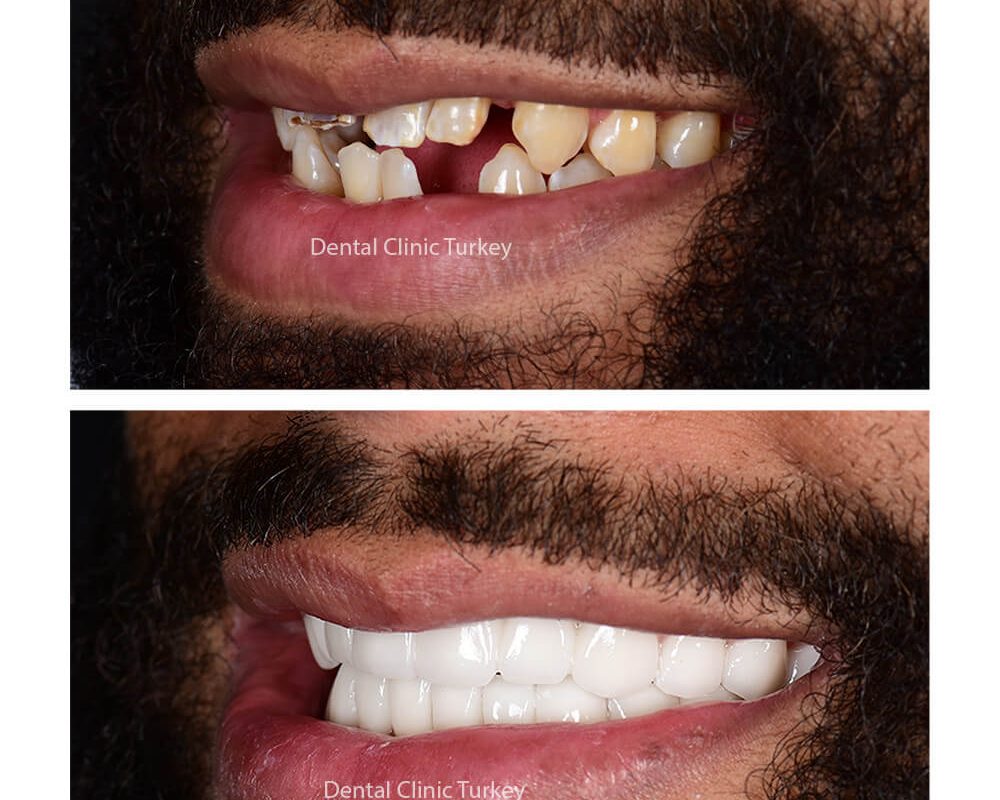
worn teeth

Treat Worn Teeth

Is It Possible to Treat Worn Teeth?

Many patients are exposed to dental abrasions for various reasons. In this article, we would like to start by examining the causes of tooth wear. Finding and eliminating the cause is half the cure.

The answer to the question of why the tooth is eroded seems simple. The first thing that comes to our minds is that people are clenching their teeth more because of the increasingly difficult living conditions and stress. However, this is not the only situation. Our teeth are also significantly eroded by the consumption of acidic foods. Another factor is the height of dental prostheses. Dental prostheses produced with hard materials such as metal or zirconium can wear down the teeth in the opposite jaw.

We have patients who apply to our clinic with teeth that are almost half worn. This situation, together with the loss of an aesthetic appearance, causes pain and sensitivity in the teeth during functional chewing. The pain felt in the teeth with the heat makes the person extremely uncomfortable. It can be cold or hot.

In the treatment of worn teeth, unless all teeth are treated at the same time and occlusion are re-arranged, individual treatments to the teeth are unsuccessful. For this purpose, after a correct determination is made, veneers can be applied to the lower and upper jaw teeth to increase the vertical dimension as much as the amount of worn teeth.

Thanks to this new generation computer-aided aesthetic dental veneers, which will be applied by correcting the errors of the previously made dental veneers, we are able to provide a better chewing efficiency as well as a more beautiful appearance.

For our patients who have pain problems in the jaw joint, we control the pain after increasing the vertical dimension with hard plates. Following the TMJ arrangement, the patient can reach the maximum comfort they can reach with dental veneers applied in the ideal vertical size.

Dental veneers prepared by our dental technicians with the Cad-Cam system give successful results that will be like your natural teeth. In this way, it is possible to achieve the best result with the least abrasion on the teeth.

Before the dental veneers are applied, the root canal treatments and gingival treatments must be completed.

What should be the coating material to be made in case the teeth are worn due to reasons such as clenching and grinding?

Although this question is open to debate, common practice is the use of zirconium-supported dental veneers. When porcelain dental veneers are used, the aesthetic layer on the metal can be broken. This is also seen in zirconium crowns. However, since there is no metal in the substrate, it does not have a bad appearance that attracts attention aesthetically. The color difference, which is one of the most important differences between zirconium and metal, comes to the fore here.

The production of dental veneers with plastic material is also one of the topics discussed. Although the researchers say that plastic teeth can be used in order to prevent the wear of the contralateral teeth, this will cause anatomical inconveniences as the joint position will change due to wear. The use of plastic-based materials has been abandoned in dental veneers for patients who grind their teeth.

Success of Treatments

The quality of the materials used is extremely important for the treatment of worn teeth. When the material has the slightest technical inadequacy, deformations begin to appear in a short time. The main factor in tooth wear is the softening of the hard enamel tissue in the tooth. Forces on the softened layer (such as clenching, grinding or brushing) quickly wear away this softened layer. If there are old fillings made, there is no wear on them.

The recommended treatment is to eliminate the factors that dissolve the enamel layer. In particular, it is recommended to treat reflux, cut acidic foods such as lemon soda cola vinegar, and use a soft toothbrush. Thick granular toothpastes that cause abrasion on the tooth surface should not be used. Appropriate pastes and creams can be recommended for the lost enamel layer to repair itself. You should get information from your dentist about this issue.

You can get more detailed information about treat worn teeth by contacting Dental Clinic Turkey. You can call us whenever you want to make an appointment. Our phone and Whatsapp number +905443480787