

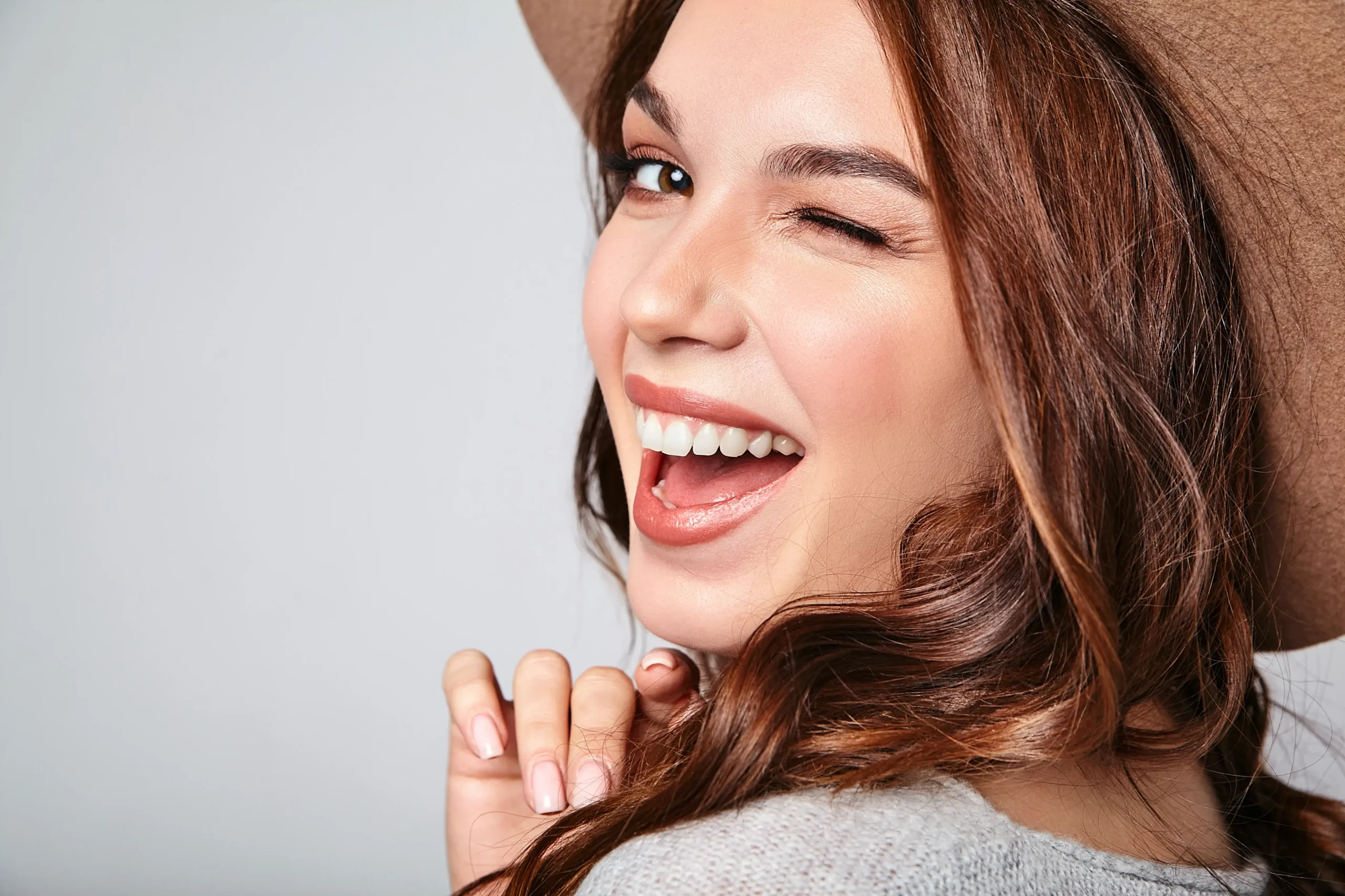
People landing on this page have usually already made the bigger decision. Turkey, yes. Veneers, yes. The thing holding them up is the material question, and it turns out to be harder to answer than they expected.
Clinic websites do not help much. Scroll through enough of them and you start to notice a pattern — each one tends to champion whichever material they happen to prefer, with before and after photos selected to make that choice look like the obvious one. The actual comparison, the one that would help you figure out which material suits your specific teeth, rarely gets written down anywhere.
What E-max Actually Is
The full name is IPS e.max, a lithium disilicate glass-ceramic produced by a Swiss company called Ivoclar Vivadent. It has been around long enough that dental labs have a detailed picture of how it performs across different clinical situations. Ceramists who use it regularly have strong opinions about what it can and cannot do.
What brought it into cosmetic dentistry is something that sounds simple but is surprisingly hard to replicate in a manufactured material: the way it handles light. A living tooth is not a solid block of white. It is semi-translucent. Photons enter through the enamel surface, interact with the internal layers, and scatter back out in a way that creates depth and warmth. That optical behaviour is why natural teeth look alive in ways that poorly done cosmetic work does not. E-max comes closer to reproducing it than most other dental ceramics because its translucency properties sit within a range that mirrors natural enamel. Under direct light, a veneer made from it reads as part of the tooth rather than something placed on top of it.
It can also be made very thin. Some E-max veneers are under half a millimetre thick. That matters because it means less of the natural tooth needs to be shaved away to accommodate the veneer. For patients who want a conservative approach that preserves as much original tooth as possible, that thin profile is a real clinical advantage.
What Zirconium Actually Is
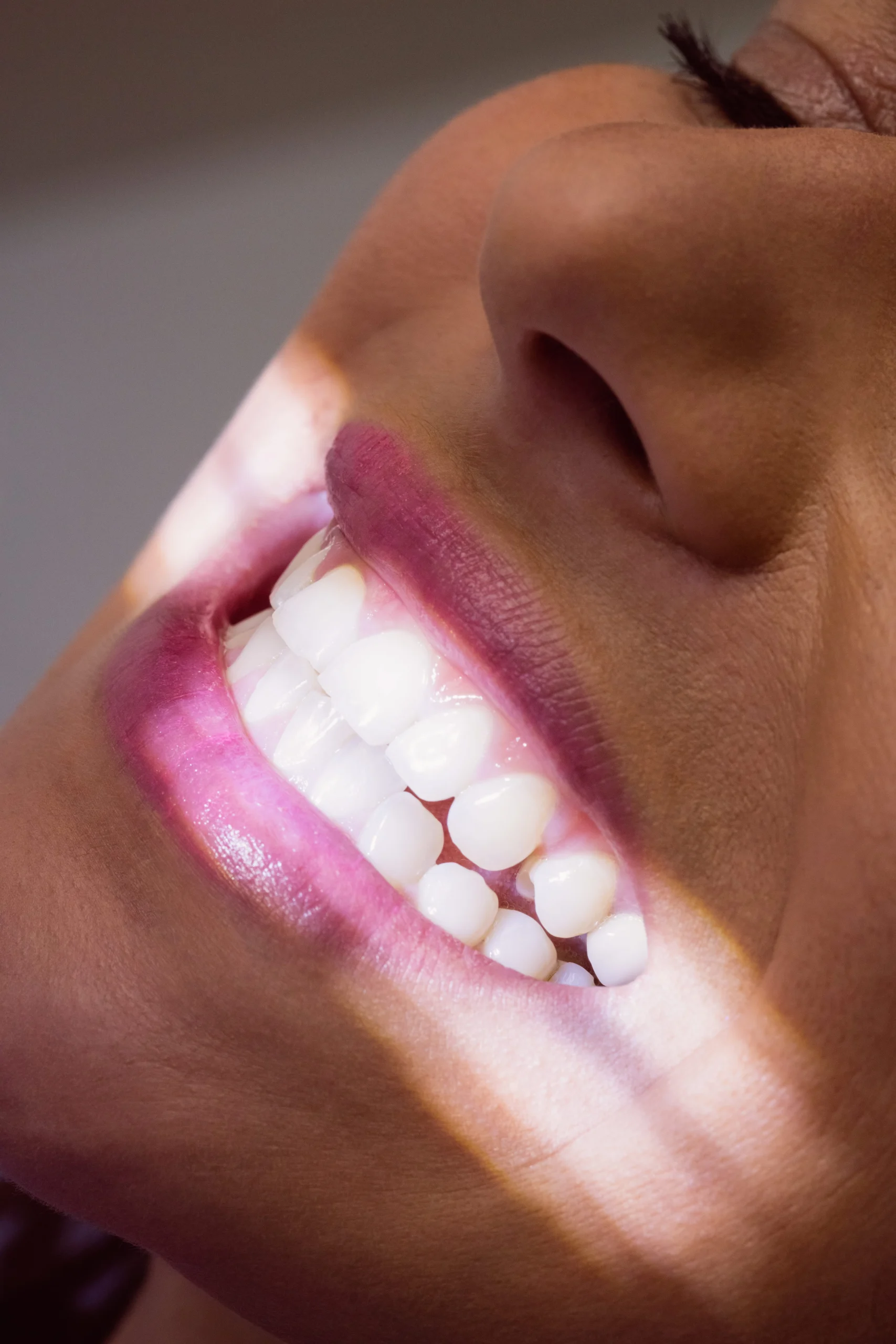
Zirconium dioxide started its life well outside dentistry. It was used in industrial ceramics, cutting tools, and aerospace components before someone realised that a material this strong and this biocompatible had obvious dental applications. It entered restorative dentistry primarily because of one characteristic: nothing breaks it under normal bite forces.
For patients who clench, grind, or simply have a heavy bite, that matters enormously. A back tooth crown made from zirconium will outlast almost any other ceramic option. The material does not chip. It does not fracture. It handles the kind of sustained pressure that would eventually compromise a more delicate ceramic.
The early knock against zirconium was that it looked dead. Dense, uniform, slightly chalky. That criticism had real basis at the time — older formulations of the material had very low light transmission and the results showed it. The situation has changed substantially. High-translucency zirconium is a different product to what was available a decade ago. Light passes through it, shade gradients are achievable, and most patients looking at a well-made zirconium veneer in a social setting cannot identify it as dental work. The gap between zirconium and E-max in optical terms has narrowed, though it has not closed completely.
The Price Difference and What Drives It
The per-tooth cost difference between E-max and zirconium in Turkey is not large. At Dental Clinic Turkey, E-max veneers cost somewhere between £50 and £75 more per tooth than zirconium. Across a full upper arch of ten teeth that adds up to £500 to £750 extra in total.
That gap reflects two things: the raw material cost and the lab hours. Getting the translucency gradient right in E-max is skilled, time-consuming work. A ceramist who has done it for years can produce a result that genuinely looks like natural enamel. One who has not produces something that looks like a good veneer but not quite a natural tooth. The material enables the result; the ceramist has to execute it.
Where E-max Wins and Where It Does Not
E-max performs best on the upper front six to eight teeth — the ones that are visible when you speak and smile in natural light. This is where its translucency makes the biggest difference. If your main concern is that veneers will look obviously artificial, E-max is the more forgiving choice because its optical behaviour gives it a natural depth that standard porcelain and even good zirconium cannot fully replicate.
It does not perform as well under sustained bite pressure. The same translucency that makes it beautiful comes at a cost: it is less dense than zirconium, and that lower density means lower fracture resistance. Patients who grind their teeth at night, who have a heavy bite pattern, or who need veneers on back teeth where chewing forces are highest are putting E-max in conditions it was not designed for. Fractures happen. Not frequently, but often enough that recommending E-max for high-stress positions is something careful clinicians avoid.
Where Zirconium Wins and Where It Does Not
Zirconium handles pressure. Full stop. For any position in the mouth where the restoration will take significant force — back teeth, patients with bruxism, cases where the bite is on the heavy side — zirconium is the safer choice because it simply will not break under normal clinical conditions. Zirconium Crowns are also the standard recommendation for implant crowns and bridges where structural integrity matters more than fine optical detail.
Sit a well-made zirconium veneer next to an untouched natural tooth in strong natural light and a trained eye will notice a difference. The optical character is slightly different. Not dramatically so, not in a way that reads as obviously artificial to most observers — but different. Whether that matters to a specific patient depends on how closely they examine their own smile, what their social and professional context is, and what the adjacent teeth look like. Some patients see the result and never give it another thought. Others, particularly those who spend time in photography or work in environments with critical close-up scrutiny, find the difference meaningful.
The Combination Approach and Why It Makes Sense
The recommendation that comes up most consistently from experienced cosmetic dentists is to use both. E-max on the upper front teeth where aesthetics are the priority, zirconium on the back teeth and on any position where bite forces are significant. Porcelain Veneers in the front aesthetic zone give you the natural depth; zirconium in the posterior zone gives you the longevity.
This combination is not a compromise. It is a clinically appropriate use of each material where it performs best. A full-arch treatment that uses only E-max everywhere is actually the compromise — trading durability for aesthetics in positions where durability should have won. A treatment that uses only zirconium everywhere is also a compromise — accepting slightly lower aesthetic quality in positions where the difference would have been noticeable.
The combination approach costs a little more to plan and execute because it requires the dentist and ceramist to work across two material systems. But the total cost increase is modest, and the result is better than either single-material approach would produce.
What Your Teeth Actually Look Like Matters More Than Material Choice
There is a point in this comparison where the material discussion becomes secondary to a more fundamental question: what is the starting condition of the teeth being treated? A patient with healthy, minimally discoloured teeth who wants mild cosmetic improvement is a very different clinical situation from a patient with heavily stained, cracked, or structurally compromised teeth who needs full coverage.
For the first patient, E-max veneers with minimal preparation make obvious sense. The treatment is conservative, the result is natural, and the material's thin profile means preserving more of the original tooth.
For the second patient, the amount of preparation required to address the structural issues may mean that a veneer approach is not appropriate at all and that full crowns — almost certainly zirconium — are the right clinical answer. No amount of preference for E-max changes what the tooth actually needs.
This is why the material conversation only becomes useful after a proper clinical assessment. A clinic that gives you a definitive E-max or zirconium recommendation before looking at your X-rays and photographs is telling you what you want to hear rather than what your teeth actually require.
The Honest Comparison: E-max vs Zirconium at a Glance
Choose E-max when:
- Upper front teeth are being treated
- Natural translucency is the priority
- Normal bite, no grinding history
- Teeth are healthy enough for thin veneers
- Photography or close scrutiny matters
Choose Zirconium when:
- Back teeth or implant crowns involved
- Patient grinds or has heavy bite
- Teeth have structural damage
- Full coverage crowns are required
- Maximum durability is the priority
The full E-max vs Zirconia breakdown on the clinic's treatment pages goes into the technical specifications if you want more detail on the material science side.
What This Means for Your Trip to Turkey
Both E-max and zirconium go through the same clinical process. The appointment structure is identical: assessment, preparation, scan or impression, temporaries, then final fitting. A standard veneer case in Antalya runs five to six days regardless of which material you choose.
What the material choice does affect is what happens inside the lab. E-max is less forgiving than zirconium at the ceramist stage. The translucency that makes it worth choosing has to be built deliberately into the restoration — the right internal shading, the right surface texture, the right thickness profile. A ceramist who does this work every day knows how to get there. One who does it occasionally will produce results that vary, and that variability shows up in E-max more than in zirconium because the margin for error is smaller.
So when you are comparing clinics and the price for E-max is meaningfully lower than everywhere else, the question worth asking is: where is that saving coming from? If the answer involves an outsourced lab or a ceramist with limited E-max experience, the material premium you think you are paying for is not actually what you are getting. Ask whether the lab is on-site. Ask how long the ceramist has worked specifically with E-max. The answers matter more than most patients realise.
Frequently Asked Questions
How much more does E-max cost compared to zirconium in Turkey?
Can E-max veneers be placed on back teeth?
Will zirconium veneers look artificial?
How long does each material last?
Which material looks better in photos?
Do I need to decide before I arrive?
Request a Callback
We will call you back within 2 hours during clinic hours.