

Most patients researching cosmetic dentistry in Turkey spend their time comparing veneers, crowns, and implants. They overlook composite bonding entirely, or come across it briefly and move on. That is a mistake worth correcting, because for a specific set of situations it is the most sensible option available and the one that leaves the most doors open.
Composite bonding does not compete with more comprehensive treatments. It occupies a different space. Patients who have finished a full course of treatment and want one thing adjusted. Patients who want to change something specific without touching the rest of their teeth. Patients who are not sure yet whether they want veneers and want to try a shape or length change before committing. For all of these, composite bonding is worth understanding properly.

What Composite Bonding Actually Is
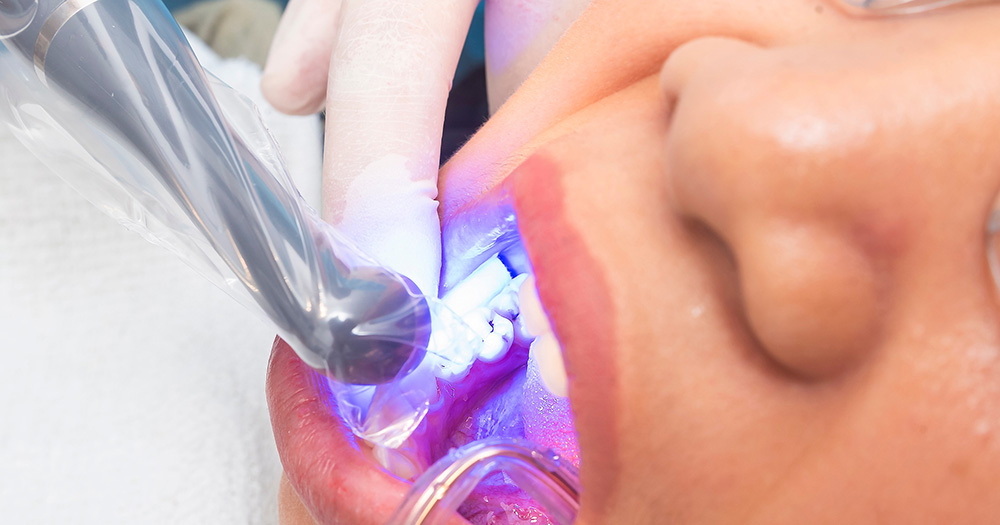
The material is a resin that shares its chemistry with the white fillings dentists have used for decades. The difference is in how it is used cosmetically. Rather than filling a cavity, the dentist builds the resin up on the outer surface of the tooth, sculpting it by hand to change the shape, close a gap, cover a chip, or mask a discoloured patch. Each increment is cured with a light before the next is added. The whole process happens at the chair with no lab involved.
No drilling. No removal of tooth structure. In the overwhelming majority of cases, no anaesthetic either. You arrive with the problem and leave without it, usually within an hour or two depending on how many teeth are involved.
The key distinction from veneers or crowns is that nothing comes off the tooth. The resin goes on top of what is already there. Because the underlying tooth is untouched, the bonding can be taken back off later without any lasting consequence. That reversibility is what makes it a genuinely low-commitment option in a field where most decisions are permanent.
What Composite Bonding Can and Cannot Fix
A chipped corner, a worn incisal edge, a fracture that has not gone deep enough to threaten the tooth. These are the situations composite bonding was made for. One appointment, immediate result, no preparation.
It works well on small gaps between teeth. If the space between two front teeth is narrow enough that the proportions of the surrounding teeth can accommodate closing it, bonding can do this in a single appointment without orthodontics.
Mild discolouration that does not respond to whitening — intrinsic staining from old fillings, fluorosis, or tetracycline — can be masked with composite resin. The coverage is not as durable or as optically complex as a veneer, but for minor cases it is a proportionate response.
Slightly uneven tooth lengths or minor shape irregularities can be evened out. A tooth that is a fraction too short, or one that has a slightly irregular shape compared to its neighbour, can be brought into proportion without any preparation of the surrounding teeth.
What composite bonding does not do well: it cannot significantly change the shade of a tooth that is heavily discoloured. It cannot correct teeth that are substantially misaligned. It cannot replace the structural protection of a crown for a tooth that has significant damage. And it is not a long-term solution for back teeth where heavy bite forces will be applied.
How Long It Lasts and What Affects That
Ceramic and composite are different materials with different lifespans and that gap is worth being clear about. E-max or zirconium restorations handle wear, bite pressure, and staining in ways that composite cannot match over time. Five to seven years is a realistic expectation for composite bonding with ordinary care.
What shortens that lifespan is fairly predictable. Grinding wears the material faster than normal use would. The same goes for habits that apply repeated pressure to front teeth — biting nails, chewing on objects, opening packaging. Coffee, tea, and red wine leave their mark on composite before they do on ceramic, because the resin surface is more porous and picks up colour over time.
Knowing this in advance is not a reason to rule composite out. It is information that belongs in the conversation with your dentist before the appointment, so that what you choose matches how you actually live.
How It Fits Into a Complete Smile Makeover
Composite bonding works particularly well as an entry point for patients who are considering a full smile makeover but are not certain what they want yet. The instinct to try something before committing to something permanent is a good one, and composite makes that genuinely possible.
A few bonded teeth give you something a digital simulation cannot: the physical experience of a changed length or shape in your actual mouth, against your actual teeth, in real lighting. If it feels right, the decision to proceed with ceramic veneers becomes much easier to make. If something is off, the composite comes back off and you adjust from there. The underlying teeth are exactly where they started.
Composite Bonding vs Porcelain Veneers: Choosing Between Them
Patients end up at this comparison eventually and it is a reasonable one to spend time on. Both treatments work on the visible surfaces of front teeth. Both address chips, gaps, and shape irregularities. What separates them is how long they last, how they look, whether the change is reversible, and what they cost.
Porcelain veneers are ceramic, made in a lab, and require removing a thin layer of the tooth's surface before they go on. That preparation cannot be undone. The payoff is a result that lasts considerably longer, holds its colour better, and in the right hands produces an optical quality that composite does not fully replicate.
Composite skips the preparation entirely. The tooth is untouched. The material goes on and comes back off without consequence. It wears faster, stains more readily, and needs refreshing sooner. For someone ready to commit to a long-term result and comfortable with the permanence of preparation, ceramic is the better answer. For someone who wants a genuine improvement without making an irreversible decision, composite is where that starts.
Composite Bonding
- No tooth preparation needed
- Fully reversible
- Single appointment
- Lower cost per tooth
- 5–7 year lifespan
- Stains more readily over time
Porcelain Veneers
- Permanent preparation required
- Lab-made, 2–3 appointments
- Higher cost per tooth
- 15+ year lifespan
- Resists staining better
- Superior optical result
Composite Bonding as Part of a Trip to Turkey
Because the procedure is completed in a single appointment with no lab stage and no recovery time, composite bonding slots easily into a trip that is already planned around other treatment. A patient spending a week in Antalya for implant surgery can have a couple of bonded teeth done during one of the lighter days without changing the overall schedule. A patient coming specifically for composite work can accomplish everything in two days and still have time to see the old town.
The cost per tooth at an established clinic in Antalya sits between £60 and £120. In the UK the equivalent runs between £200 and £400 per tooth. For a patient having five or six teeth done, that gap funds the flights and accommodation with money to spare.
The Role of Teeth Whitening Alongside Bonding
Composite resin does not respond to whitening agents. Once it is placed, its colour stays where it is. This is not a problem in itself, but it creates a sequencing issue that catches some patients out.
If you whiten after the bonding is in place, your natural teeth will lift to the new shade but the composite will not follow. The result is a mismatch between the bonded areas and the surrounding teeth that worsens as the whitening takes effect. The fix is to reverse the order: whiten first, let the shade settle for a week or two until it stabilises, and then have the composite placed to match the new baseline.
A clinic that thinks through this sequence and raises it unprompted is one that is paying attention to the outcome rather than just the procedure. The teeth whitening appointment and the bonding appointment, done in the right order, produce a result where everything matches and the composite is shade-matched to the best version of the surrounding teeth rather than a shade that will be left behind when the whitening takes effect.
What to Expect at the Appointment
The appointment itself is unremarkable by dental standards, which is part of what makes composite bonding appealing to patients who find dental visits stressful.
The tooth surface is cleaned and a mild etching agent is applied to create a surface the resin can grip. The composite is then placed in small increments, each layer shaped by hand before being hardened with the curing light. This sculpting stage is where the dentist's skill is most visible. The material is the same regardless of who is handling it, but the judgment involved in building the right shape, the right contour, the right edge profile, varies considerably from one practitioner to another. A dentist with strong aesthetic instincts and experience in cosmetic work will produce a noticeably different result from one who primarily does restorative work.
The final stage is polishing. This is what gives the composite its surface sheen and determines how closely it catches and reflects light in the way natural enamel does. Time spent on polishing is not wasted time. It is what separates a result that looks natural in conversation from one that looks like a filling.
There is nothing to recover from. Most patients experience no discomfort during the procedure and only occasional mild sensitivity in the day or two following, particularly in teeth that were already somewhat sensitive before treatment.
Frequently Asked Questions
How long does composite bonding last?
Is composite bonding painful?
Can composite bonding be removed?
Will composite bonding stain?
Is composite bonding suitable for back teeth?
How does composite bonding compare to veneers in Turkey specifically?
Request a Callback
We will call you back within 2 hours during clinic hours.