








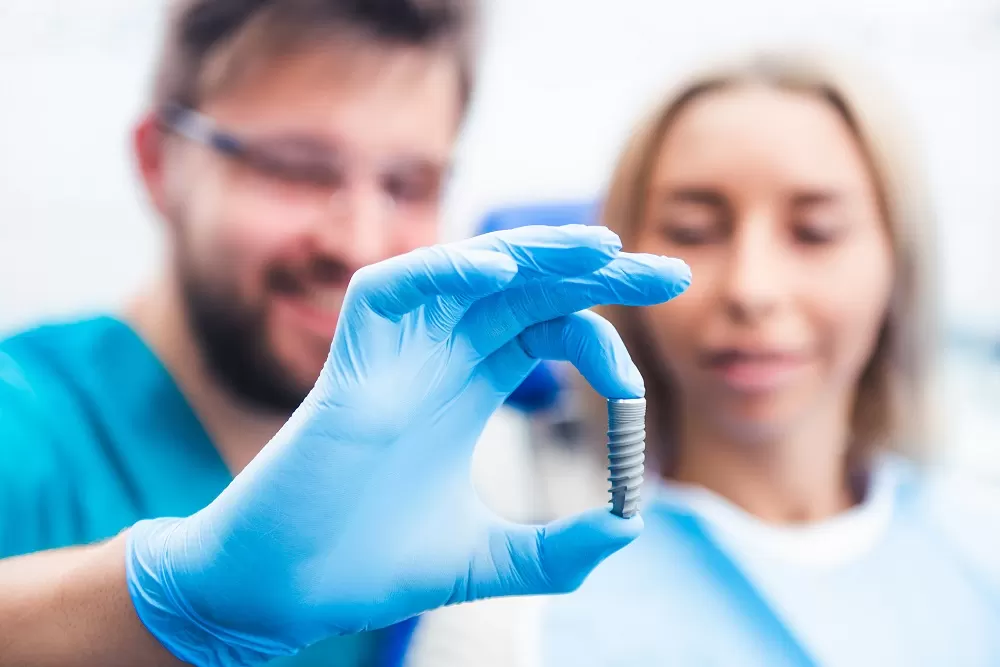
An implant is an artificial device or prosthesis that is inserted into the body and fixed with an implant screw. In medicine, an implant is used to replace a part or organ of the body after an illness or injury that has led to loss of function.
For example, heart patients can have a pacemaker implanted, while people with bone loss can receive dental implants. Implants can also be used in many other ways, for example as limb prostheses, hip or knee replacements, breast implants, ear implants, hair replacement and many other medical devices.
Implants are usually inserted in a surgical procedure. This procedure can be carried out under local anaesthesia or general anaesthesia. The implant is designed to integrate into the body's natural tissue or bone and is often designed for long-term use. First the implant screw is inserted; the second procedure takes place once the screw has adapted to the mouth.
Implants have many advantages, and especially when they replace a malfunctioning or damaged organ, they can improve quality of life. However, there are also some risks, in particular those of surgery and the danger of infection. It is therefore always recommended to have the operation carried out by a specialist doctor or surgeon.
What Is an Implant Screw?
Implant screws are a medical device that usually consists of titanium screws that are inserted into the bone structure. These screws are used in various medical devices such as dental implants, orthopaedic implants and similar implants.
Screws are used in implants that need to have a firm structure, such as dental implants. These screws replace the tooth root by being inserted into the jawbone, and serve to hold dentures, bridges or partial prostheses in place.
Screws are normally made of titanium, because this material is strong and durable and compatible with the human body. The implant is not only made of titanium; it is also available in different sizes and shapes and is inserted through a surgical procedure.
Implant screws hold the bone structure firmly, thus ensuring the stability of the implant and a long lifespan for it. However, there are some risks when inserting implant screws, in particular surgical complications, infection and screw failure. It is therefore always recommended to have the operation carried out by a specialist dentist or orthopaedic surgeon.
How Implant Treatment Is Carried Out
Implant treatment takes place in five steps. Teeth that can no longer be strengthened with fillings can be treated with implant treatment. First the screw is placed, and after a longer period the second step takes place and the treatment is completed.
Inserting the implant screw, the first step, is a demanding process. The implant screw is placed in the bone tissue using a special surgical procedure. The process usually consists of the following steps:
Anaesthesia: First, the dentist applies a local anaesthetic to the area where the implant screw is to be placed. This ensures that you feel no pain or discomfort.
Incision: The dentist makes an incision in the area where the implant screw is to be placed. This incision exposes the area where the implant head will be placed.
Drilling: Next, the dentist uses a special drill to make a hole in the bone tissue. This hole prepares the area where the screw will be placed.
Screw placement: The implant head is inserted into the hole with a special tool. The area where the screw is placed is tightly closed.
Healing process: The healing process is necessary so that the implant head bonds with the bone tissue. This process can usually take several months. Once the implant screw has bonded with the bone tissue, the further phases of implant treatment begin.
Although inserting the implant head is a surgical procedure, it is usually painless. Your dentist can give you more detailed information about implant treatment and draw up a suitable treatment plan for you.
What to Bear in Mind After the Implant Head Is Fitted
After implant treatment, once the screw has been inserted, there are a few aspects that must be taken into account while the implant head fuses. After the implant cap has been fitted, it is important to pay attention to the following points:
Healing process: After the implant screw is inserted, a healing process is needed so that it integrates into the bone tissue. This process usually takes 3 to 6 months, and it is important to follow your dentist's recommendations during this time.
Oral hygiene: As with other dental work, oral hygiene is important for implant caps, gums and teeth. Good oral hygiene is essential for the longevity of the implant. Implant care should be carried out through routine oral care practices such as brushing, flossing and using mouthwash; in short, attention should be paid to oral and dental health.
Food choices: After the implant cap is fitted, you may need to change your eating habits. Hard, sticky and hard-to-chew foods are on the list of things you must not eat. They can damage your implant and prolong the healing process. Soft, easy-to-chew foods should be preferred instead.
Smoking: Smoking after the implant cap has been fitted can impair the healing process and increase the risk of implant failure. Smokers are therefore advised to avoid smoking as far as possible.
Dental visits: After the implant screw has been inserted, regular dental check-ups and care are important. Your dentist monitors the condition and health of your implant and recommends treatment if they find problems.
Avoid being hit: Anyone who plays sport in particular should take care not to be hit on the chin. In some cases, the impacts can cause the screws to break.
In summary, after the implant cap has been fitted, you should pay attention to factors such as good oral hygiene, a proper diet and not smoking, and follow your dentist's recommendations. In this way, the health and longevity of your implant are preserved. If these are not observed, there is a risk of screw breakage.
Frequently Asked Questions About Implant Treatment
Because implant treatment is a five-step and delicate surgical procedure, patients have many questions about implants. Before the treatment is carried out, the patient should be given the necessary information. Below, we answer all the questions you may have or need to ask about implant treatment.
What Should Not Be Eaten After an Implant?
After the implant screw has been inserted, the patient may need to make changes to their daily routine. Patients with an implant head should pay attention to certain foods during the treatment process. Foods and drinks that should not be consumed after an implant are:
- Spicy and heavily seasoned foods
- Alcohol and smoking
- Hard and raw foods
- Acidic drinks
- Extremely hot or cold foods
- Trying to open heavy and hard objects with your teeth.
In general, try to eat soft, easy-to-chew foods after an implant. This can speed up the healing process and relieve pain. In addition, be sure to follow your doctor's recommendations.
How Many Days Does Healing Take After an Implant?
The complete recovery time after an implant can differ from person to person and depends on many factors. Factors such as the size of the area where the implant is placed, how complex the operation is, and the patient's general state of health and lifestyle can influence the duration of the healing process.
The complete recovery time can usually vary between 3 and 6 months, depending on the size and complexity of the area where the implant is placed. The adaptation of the implant screw to the bone is an important factor here.
How Many Hours After the Implant Is Placed Can You Eat?
Because there is a risk of bleeding in the mouth after the implant screw is inserted, nothing should be eaten for several hours after the operation. In the first few days, soft, easy-to-chew foods should be preferred. You will receive more detailed instructions on eating and drinking based on your doctor's recommendations.
From What Age Is Implant Treatment Carried Out?
Implant treatment is usually carried out once bone development is complete, that is, after puberty. It is generally recommended that implant candidates be over 18 years old, but every patient is different and your doctor can help you determine the best time for you. In some special cases, implant treatment can be carried out even before puberty.


